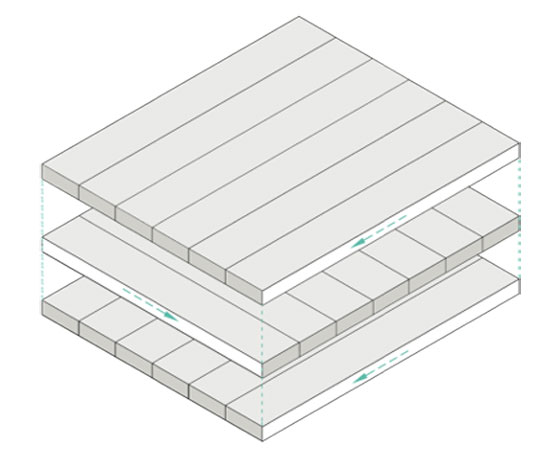
Cross-Laminated Timber (CLT) is an innovative and versatile engineered wood product gaining significant traction in modern construction. Essentially, CLT panels are created by layering multiple boards of sawn timber perpendicularly to one another and then bonding them together with structural adhesives. This “cross-lamination” technique, typically involving a minimum of three layers, provides exceptional strength, stability, and rigidity to the resulting panels.

Manufactured using structurally graded timber, CLT offers a sustainable and efficient building solution for a wide range of applications, from residential to large-scale commercial projects. Its unique composition unlocks numerous benefits that are transforming how we design and build.

Want to discover more about how CLT can enhance your next project? Read on to explore its many advantages in detail.

Versatile Structural Applications

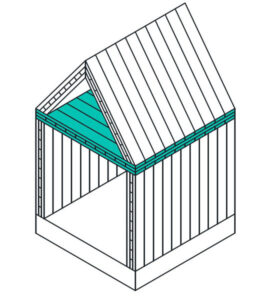
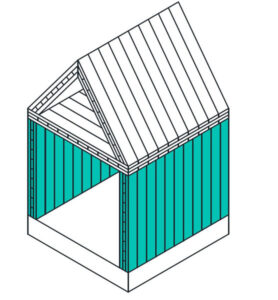
Cross-Laminated Timber (CLT) panels offer remarkable versatility, serving as robust structural elements for a wide array of building components. These engineered wood panels are commonly utilized as load-bearing walls, providing excellent vertical support and lateral stability. Beyond walls, CLT’s inherent strength and dimensional stability make it an ideal choice for floor slabs, creating solid and quiet walkable surfaces. Furthermore, their lightweight nature and ease of installation extend their application to roof structures, offering a durable and efficient solution for various building typologies.

CLT PROJECT TYPES

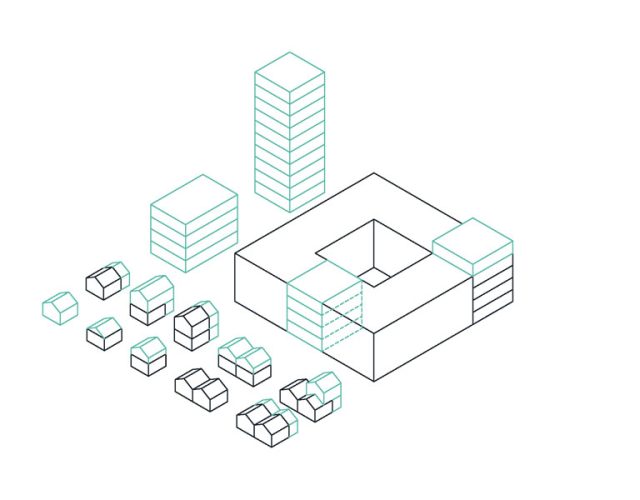
Cross-Laminated Timber (CLT) offers unparalleled versatility, enabling the construction of virtually any building type. Thanks to its exceptional technical characteristics, including high strength-to-weight ratio and dimensional stability, CLT is an ideal structural solution for projects ranging from single-family homes and multi-story residential buildings to commercial and institutional structures like offices, schools, and even high-rise developments. Its adaptability allows for innovative and efficient designs across the entire spectrum of building scales.

.

02-D-APLICACIONES-CUBIERTAS

There are many advantages to using CLT as a construction material. These include:

  • Óptimal strength-to-weight ratio.

A structure with the same strength but a lower weight, allowing for optimized foundations. Lower foundation costs.

Its lightness makes it easier to handle on-site compared to other systems.

Very useful for extensions to existing buildings, as it adds less weight than other systems.

  • Higher degree of industrialization and precision

Thanks to CNC or numerical control machines, once manufactured, CLT panels are machined to the specific shape and exact dimensions of the project, allowing for greater precision and a lower risk of on-site failures.

It requires greater definition in the design phase, as the panels will leave the factory with a high level of construction precision, ready for direct installation on-site.

  • Dry construction and faster assembly.

Waiting times on-site are reduced (there is no need to wait for setting or curing times for the structure to be loaded).

Quick and easy assembly and joining.

Reduced construction time = lower costs.

Cleaner construction, lower expenditure of resources such as water, and less waste generation.

  • Reduced carbon footprint if produced locally.

Circular, renewable, and recyclable.

Wood is a material that achieves a negative carbon footprint at the end of its life cycle.

A construction system that is more respectful of the environment and the immediate surroundings.

Minimal waste reduction.

As a construction element, it continues to store CO2 throughout its entire lifespan.

  • Good energy performance.

Construction with CLT greatly facilitates the elimination of thermal bridges in the thermal envelope.

Relatively low thermal conductivity, functioning as both a structure and an enclosure.

Without being an insulating material, wood provides a much higher level of insulation than other materials, which allows for reduced thicknesses of enclosures, achieving greater usable surface area, with equal thermal requirements.

  • Architectural aesthetics and warmth.

Great aesthetic possibilities.

Possibility of leaving it “exposed” by relying on the aesthetics and warmth of the wood itself, or it can be covered with other materials to achieve other types of visual effects.
These are some of the steps in the production of our CLT panels:

The Xilonor panel range consists of the following products:

CLT DesignationLayerResistance class of the boarding according to EN 338
Xilo-CLTOuter layers100% C16
Inner layers100% C16
Xilo-CLT+Outer layers100% C24
Inner layers

≥ 70% C16

≤ 30% C24

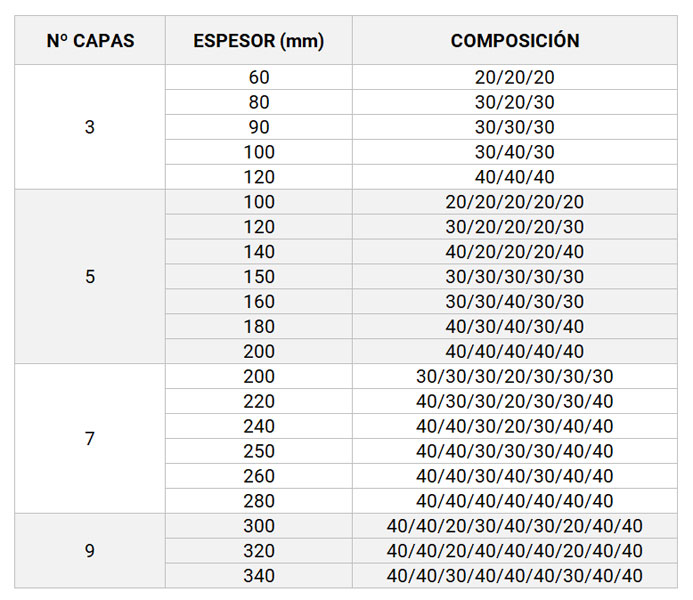
The layer composition is typically a symmetrical section consisting of 3, 5, 7, or 9 layers.

*Other compositions are available upon request, depending on table availability.

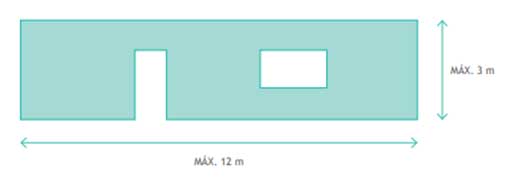
Our maximum production sizes are up to 3.00m x 12.00m.

Xilo-CLT and Xilo-CLT+ panels can be manufactured so that their external layers present different possibilities of surface visual finish:

N          Non Visual Quality             Panels that will be clad. The CLT will not be visible.

I           Medium Visual Quality*   Panels that will be exposed with intermediate aesthetic requirements, e.g., commercial or industrial buildings.

V          High Visual Quality*          Panels that will be exposed and require high aesthetic demands, e.g., residential buildings, schools, and offices.

*Medium and high visual qualities include surface sanding.

QUALITIES CLT XILONOR

Denomination 

NN

VN

VV

IN

II

VI

Outer Layer

N

V

V

I

I

V

Inner Layer

N

N

N

N

N

N

Outer Layer

N

N

V

N

I

I


Effective logistics are vital for project success. After precision-machining CLT components at our factory, we prepare them for dispatch.

For UK and international projects, we utilize break bulk sea transport, offering:

  • Versatility: From small additions to multi-load developments.
  • Sustainability & Economy: Lower emissions and cost versus road transport.
  • Simplified Customs: We handle all processing.
  • Flexible On-Site Delivery: Material transferred at port for specialized delivery, including rigid lorries for tight access.

Your loading sequence is meticulously planned to facilitate seamless on-site installation, ensuring secure arrival.

Contact our Xilonor to discuss your delivery needs.

.